Distance and Measurement Sensors
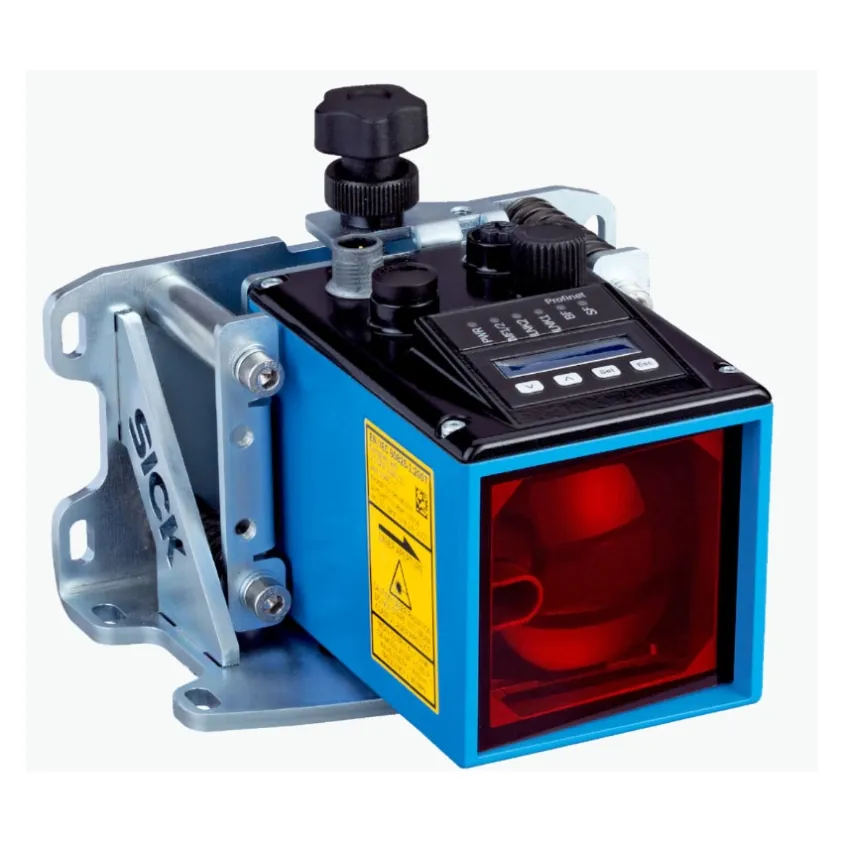
SICK DL100-21AA2102 Sensor
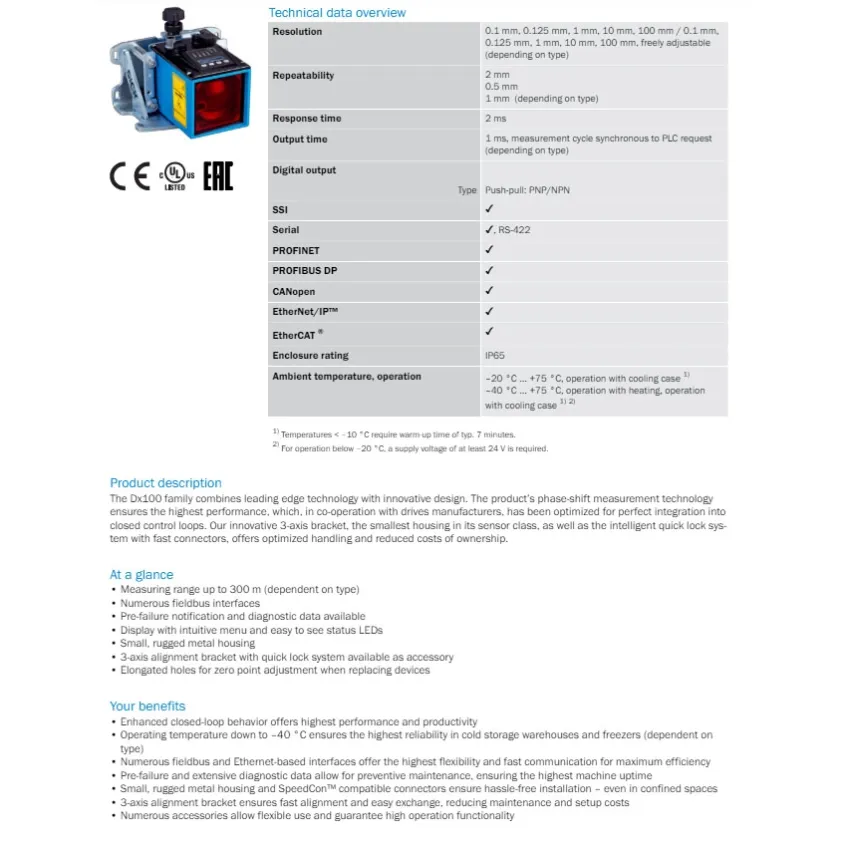
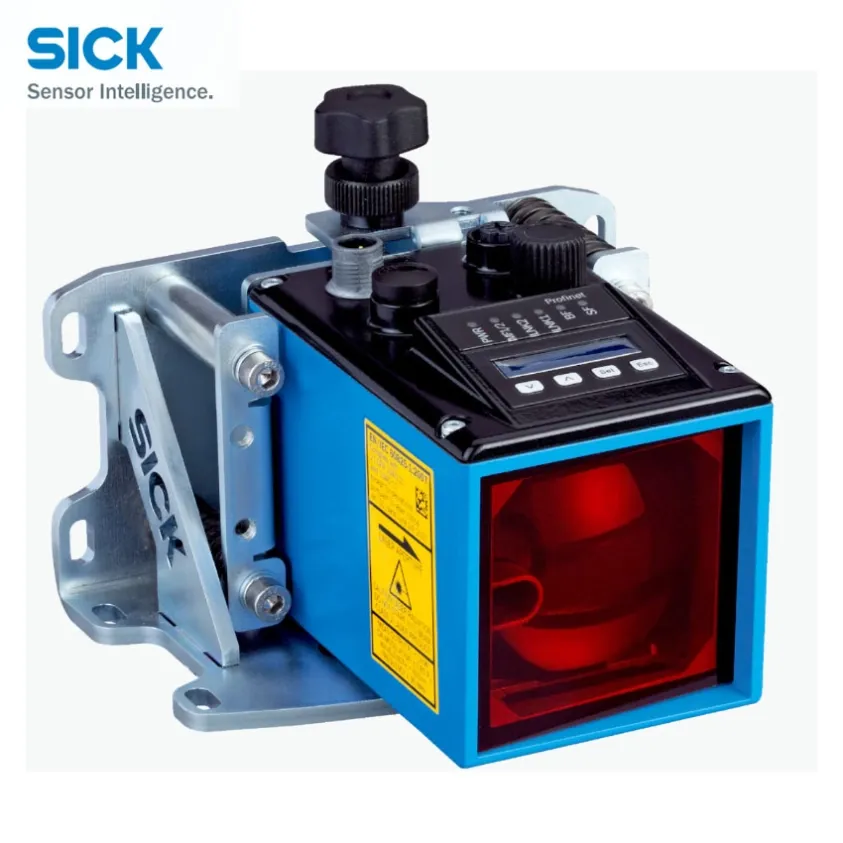
SICK DL100-21AA2102 long-range laser distance sensor. Surface-independent distance readings for cranes, AGV paths and silo level monitoring.
Overview
The SICK DL100-21AA2102 is a variant of the DL100 long-range laser distance sensor family. It brings precise time-of-flight distance measurement to applications such as crane positioning, bulk level monitoring and long-travel vehicle detection, with stable readings regardless of the target surface.
How It Works
Laser pulses travel to the target and back, and the sensor converts the measured time of flight into a distance value. The evaluation does not depend on how much light returns, so dark, glossy or structured surfaces are measured with the same distance rating. The result is available as an output signal for the machine control.
Key Features
- Long-range laser distance measurement based on time of flight
- Surface-independent readings for dark and bright targets
- Visible laser spot simplifies commissioning
- Suitable for continuous duty in industrial environments
- Companion variant to the DL100-21AA2101 within the same family
- Rugged metal housing for demanding installations
Typical Applications
- Long-travel positioning of overhead cranes and gantries
- Distance monitoring on automated guided vehicle paths
- Bulk material level measurement in silos and bunkers
- Position feedback on large machine axes
- Collision-adjacent distance checks on transfer systems
Specifications
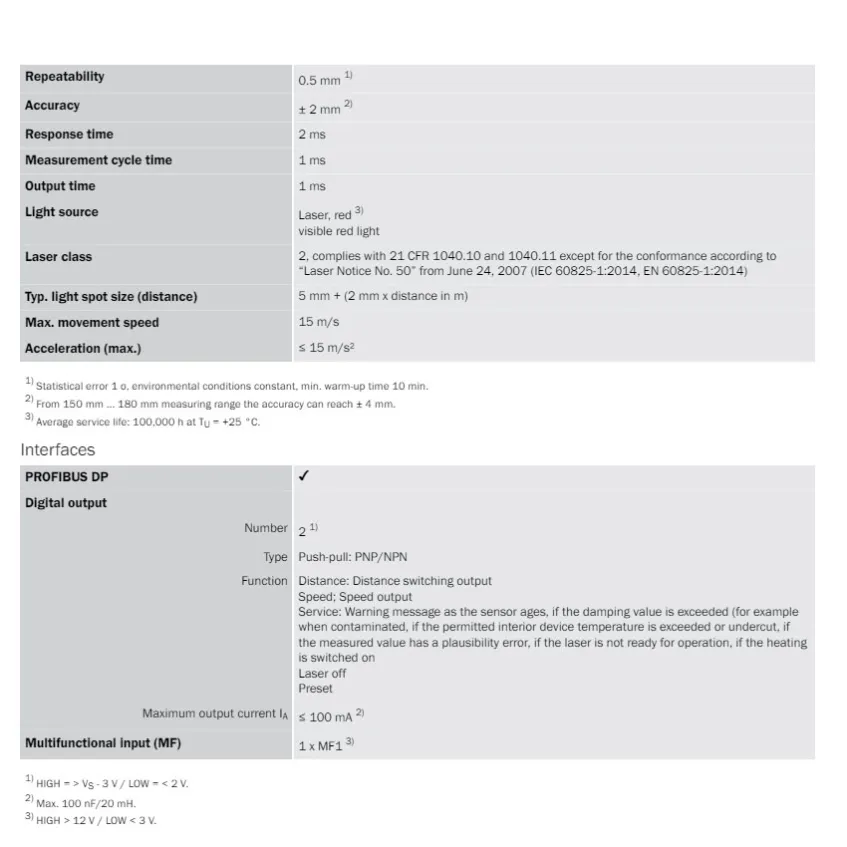
Attribute | Value |
|---|---|
Model | SICK DL100-21AA2102 |
Detection principle | Laser time-of-flight distance measurement |
Family | DL100 long-range laser distance sensors |
Light source | Laser, visible red |
Installation and Setup Notes
Ensure a stable mechanical base and keep the optical window clean. Align the beam perpendicular to the target where possible; strongly angled surfaces deflect the reflection and can reduce the signal margin. Record the reference distance after commissioning so drift can be checked during maintenance.
Frequently Asked Questions
What is the difference between the AA2101 and AA2102 variants?
They are configuration variants of the same DL100 family, differing in output and connection configuration; choose according to the control system interface.
Is it affected by ambient light?
No, the pulsed laser measurement and spectral filtering make outdoor-adjacent operation with sunlight possible.
Can it replace a draw-wire sensor?
For non-contact long-distance measurement it is often the cleaner solution, since there is no wire to wear out.
Related Distance and Measurement Sensors
See the SICK DL100-21AA2101 for the companion variant, and the SICK DT1000-S11101 for short-range precision distance measurement.