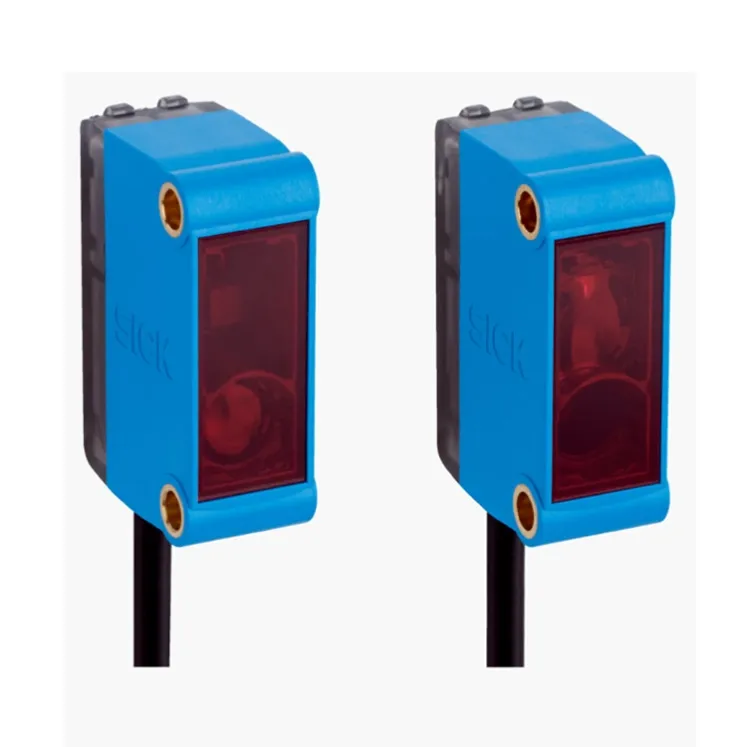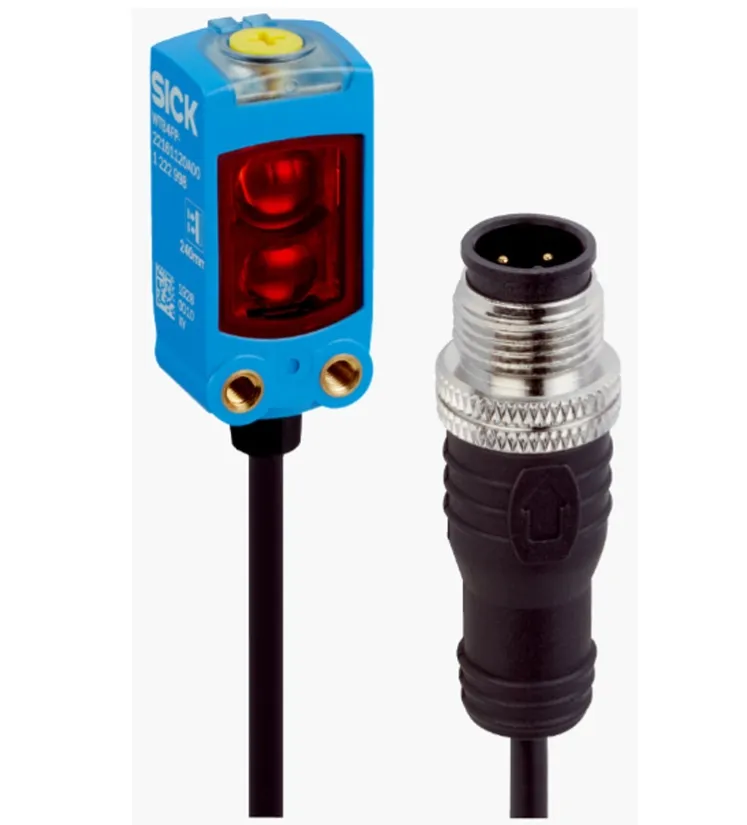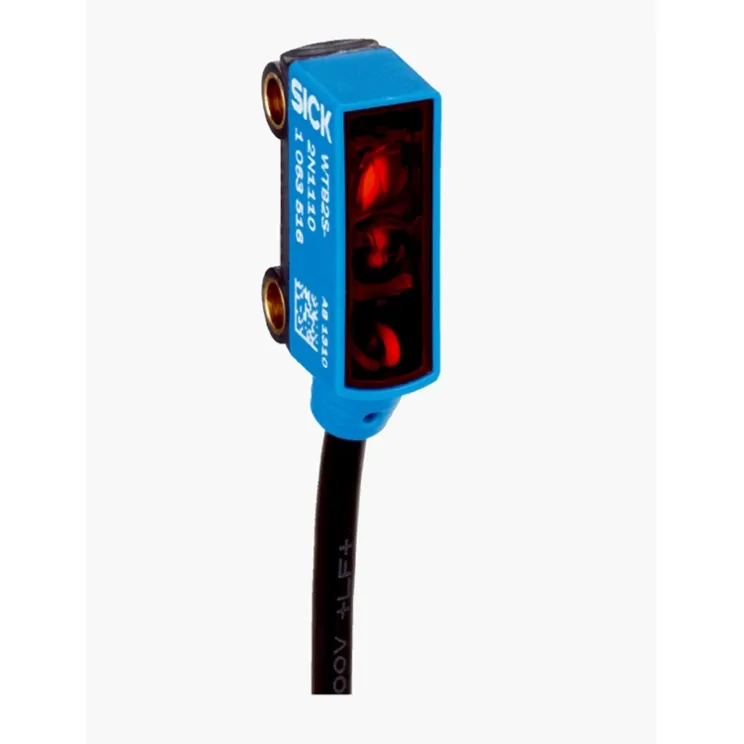
Photoelectric Sensors
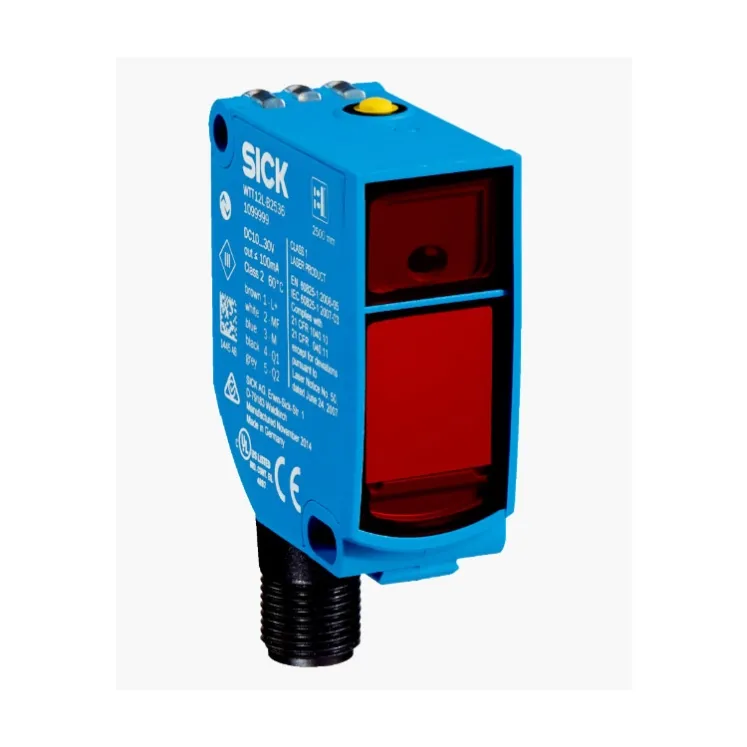
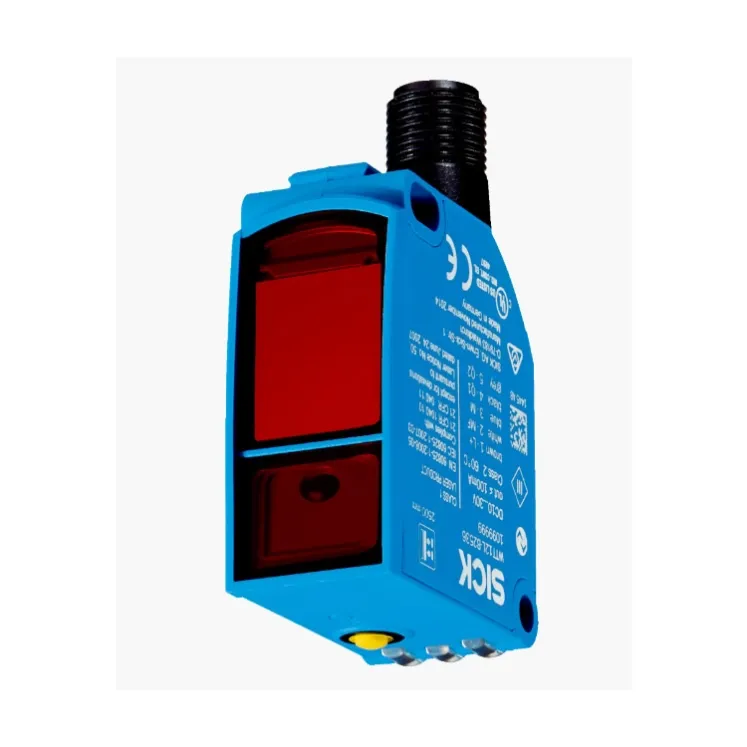
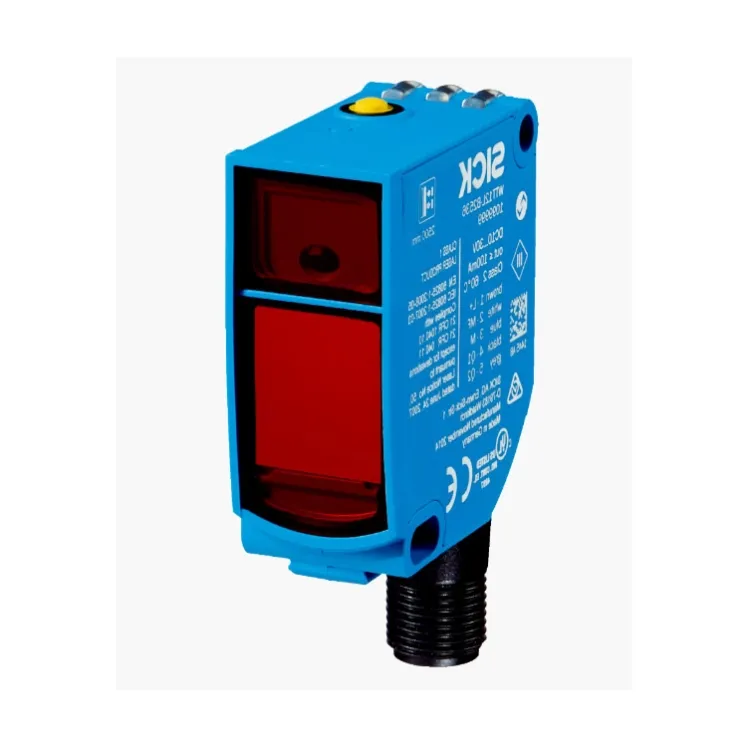
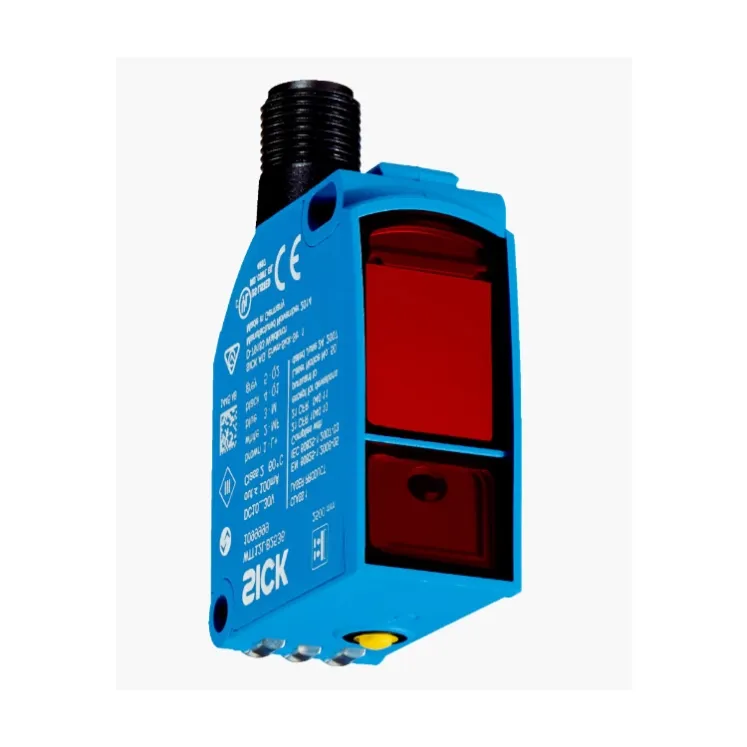
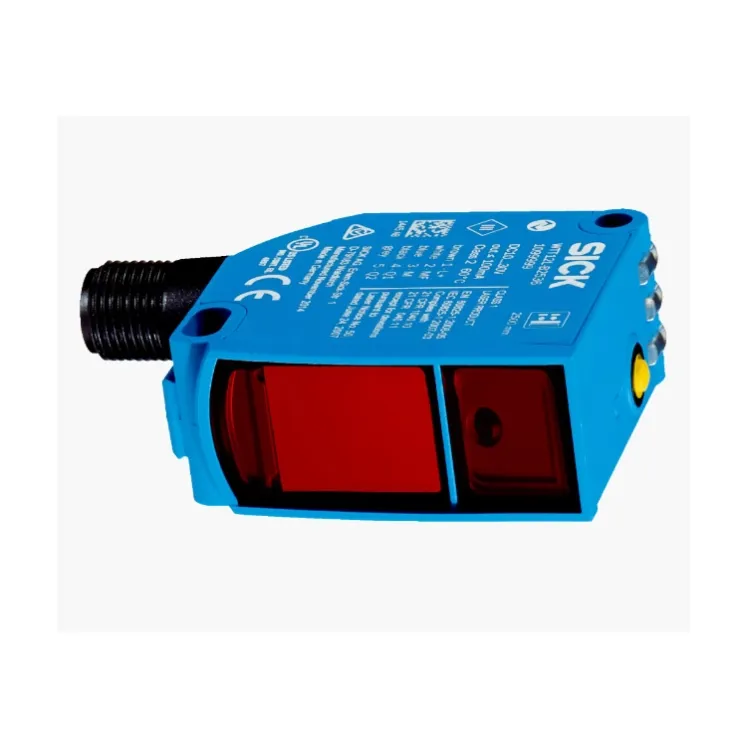
SICK WTT12L-B2542 Sensor
SICK WTT12L-B2542 laser distance sensor, PowerProx family, part 1072636. Precise time-of-flight switching for small parts and fast production lines.
Overview
The SICK WTT12L-B2542 (part number 1072636) is a laser distance sensor of the WTT12 PowerProx family. It measures the time of flight of a laser pulse and switches at a precisely defined distance with background suppression behavior. The small, visible laser spot allows accurate detection of small parts and reliable switching at longer suppression distances than LED-based diffuse sensors achieve.
How It Works
The sensor emits short laser pulses and measures the time until the reflection returns from the target. Because time of flight is evaluated, the switching result depends on distance rather than on the amount of reflected light. Objects in front of the set distance are detected; surfaces behind it are ignored, regardless of their color, gloss or pattern.
Key Features
- Laser time-of-flight measurement for distance-based switching
- Small, precise light spot for small-part and edge detection
- Color-independent detection with a fixed switching point
- Compact W12-format housing for machine integration
- Suitable for fast lines thanks to short response times
- Visible laser spot simplifies alignment and troubleshooting
Typical Applications
- Small-part detection on high-speed assembly and packaging lines
- Precise presence checks where LED light spots are too large
- Detection of dark or glossy objects at defined distances
- Monitoring of fill levels and stack heights with defined backgrounds
- Verification of parts in tight robotic end-of-arm tooling
Specifications
Attribute | Value |
|---|---|
Model | SICK WTT12L-B2542 |
Part number | 1072636 |
Detection principle | Laser time-of-flight with background suppression (PowerProx) |
Light source | Laser |
Housing family | W12 compact rectangular |
Installation and Setup Notes
Laser safety rules apply: never look into the beam and follow the label instructions during commissioning. Mount the sensor so the spot lands on the target across its full travel, set the switching distance, and verify that background objects remain beyond it. Laser sensors tolerate vibration well, but rigid mounting preserves the alignment advantage of the small spot.
Frequently Asked Questions
Why choose a laser time-of-flight sensor over a LED background-suppression sensor?
The laser spot is much smaller and sharper, and suppression distances are longer. This enables detection of small parts and reliable switching where LED diffuse sensors lose contrast.
Can the WTT12L detect black rubber parts?
Yes. Switching is based on time of flight, so even weak reflections from dark surfaces produce a correct distance reading.
Is the light spot dangerous?
The laser is classified for industrial use and is eye-safe under intended operating conditions, but standard practice is to avoid direct beam exposure.
Related Photoelectric Sensors
For an LED-based background-suppression alternative in the same housing class, see the SICK WT12L-2P140S03. For compact G6 background suppression, see the SICK GTB6-N1212.