Photoelectric Sensors
SICK WF120-60B410 Sensor
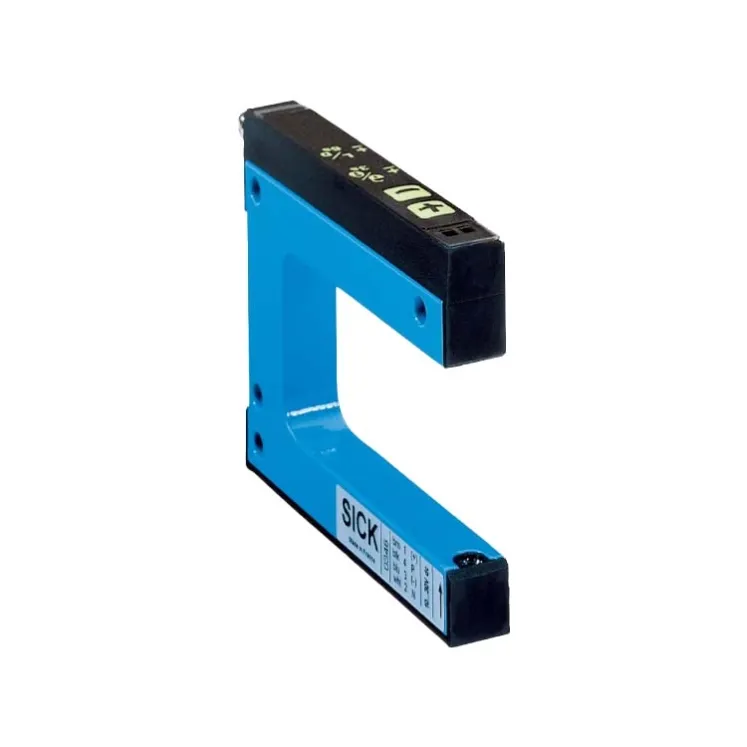
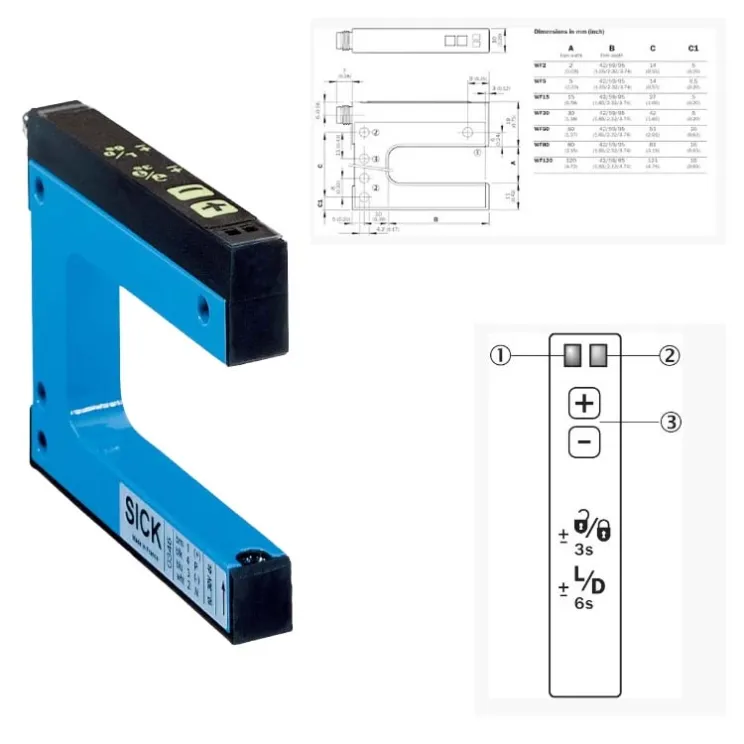
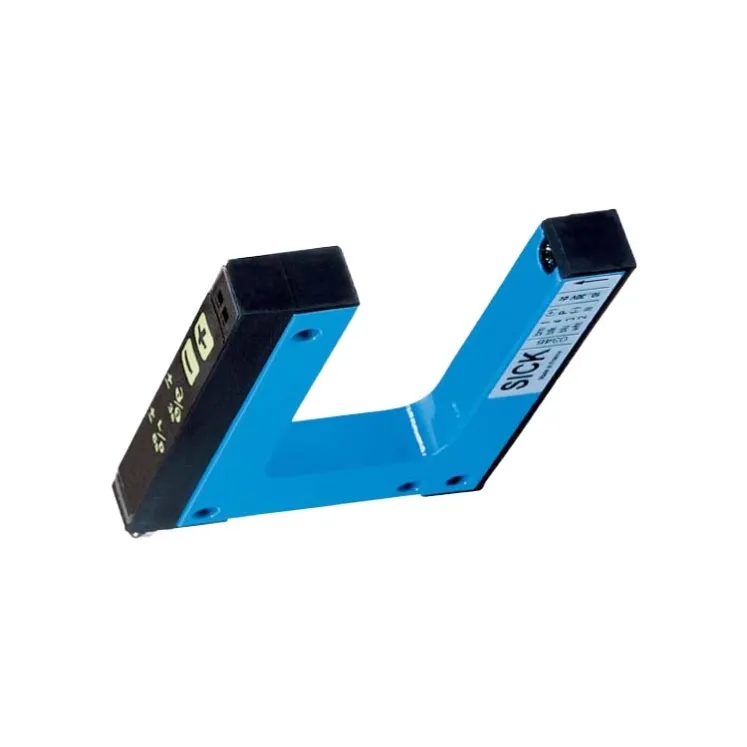
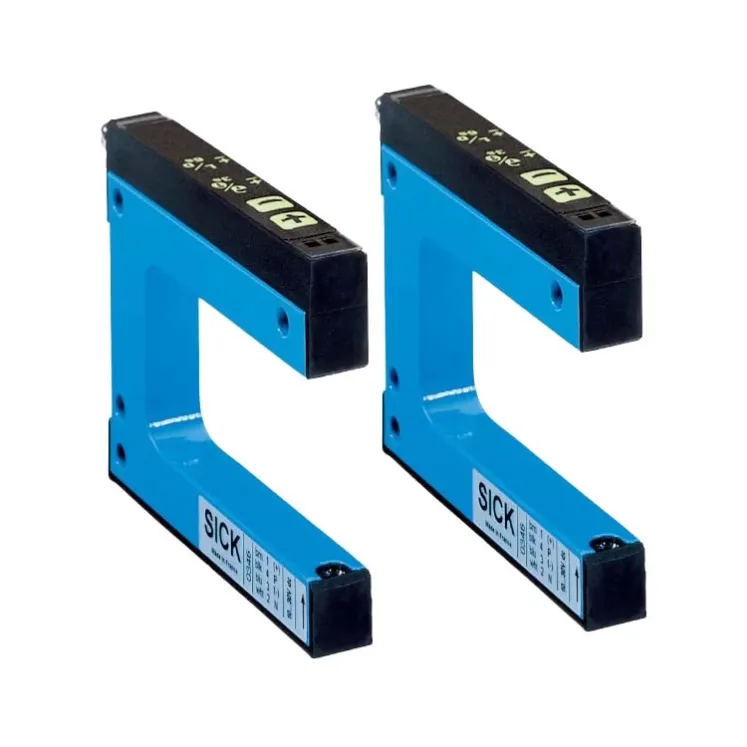
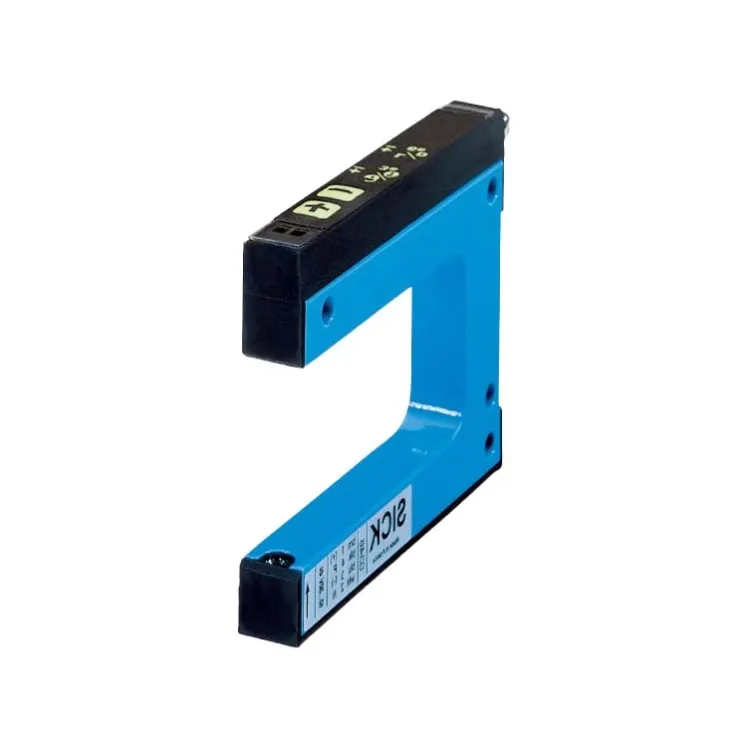
SICK WF120-60B410 slot sensor, 120 mm slot, part 6028442. Wide fork for webs, tags and profiles with permanently aligned optics.
Overview
The SICK WF120-60B410 (part number 6028442) is a slot sensor from the WF family with a 120 mm slot width. The wide fork accommodates broader webs, tags and profiles, and the integrated sender-receiver geometry means the optical axis never needs adjustment in the field.
How It Works
Light travels across the 120 mm slot from the sender to the receiver integrated in the opposite arm. Objects passing through the slot interrupt the beam and trigger the output. The one-piece housing maintains the optical alignment permanently, even under vibration.
Key Features
- 120 mm slot width for wide webs, tags and profiles
- Factory-aligned optics with no on-site adjustment
- Rigid housing stable under machine vibration
- Part number 6028442
- Fast, reliable edge and object detection
- Suitable for continuous operation on converting lines
Typical Applications
- Edge detection on wide paper and film webs
- Tag and ticket detection on processing machines
- Profile and tube presence checks on handling lines
- Monitoring of material flow in printing machinery
- Hole and window detection on wide labels and packaging
Specifications
Attribute | Value |
|---|---|
Model | SICK WF120-60B410 |
Part number | 6028442 |
Detection principle | Slot (fork) photoelectric |
Slot width | 120 mm |
Installation and Setup Notes
Mount the slot sensor so the material runs through the center of the wide slot; the long gap tolerates web wander but should not be used as a guide. Secure the cable with strain relief and avoid tight bends. Keep the slot interior clean, particularly in paper dust environments, to preserve the detection margin.
Frequently Asked Questions
When is a 120 mm slot needed?
For wide webs, tags, profiles or objects that cannot pass through narrower 40 mm or 70 mm forks.
Does web flutter affect detection?
The wide slot tolerates some lateral movement; the beam is interrupted whenever the material enters the optical plane.
Is alignment required after replacement?
No, the optical axis is fixed by the housing, so a replacement sensor works immediately after mounting.