
Photoelectric Sensors
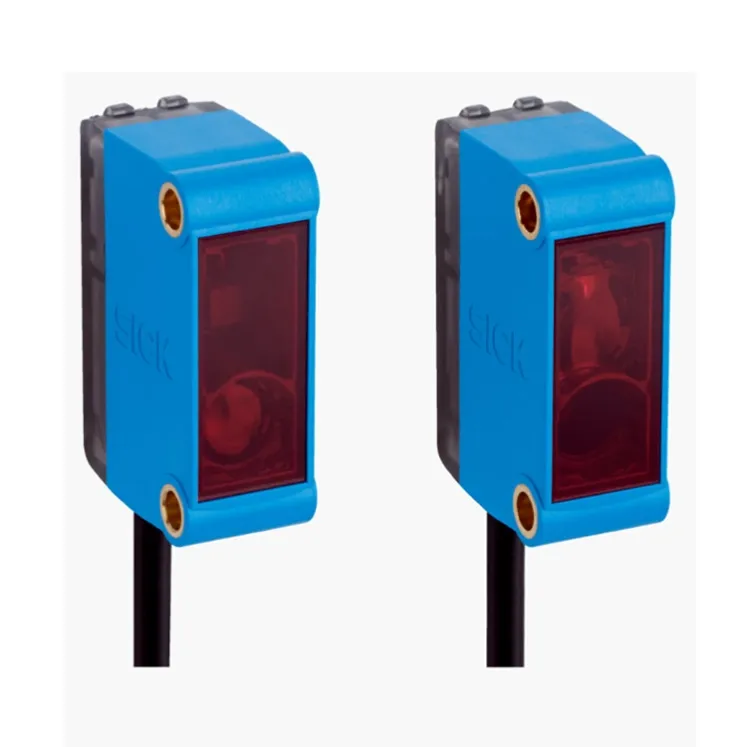
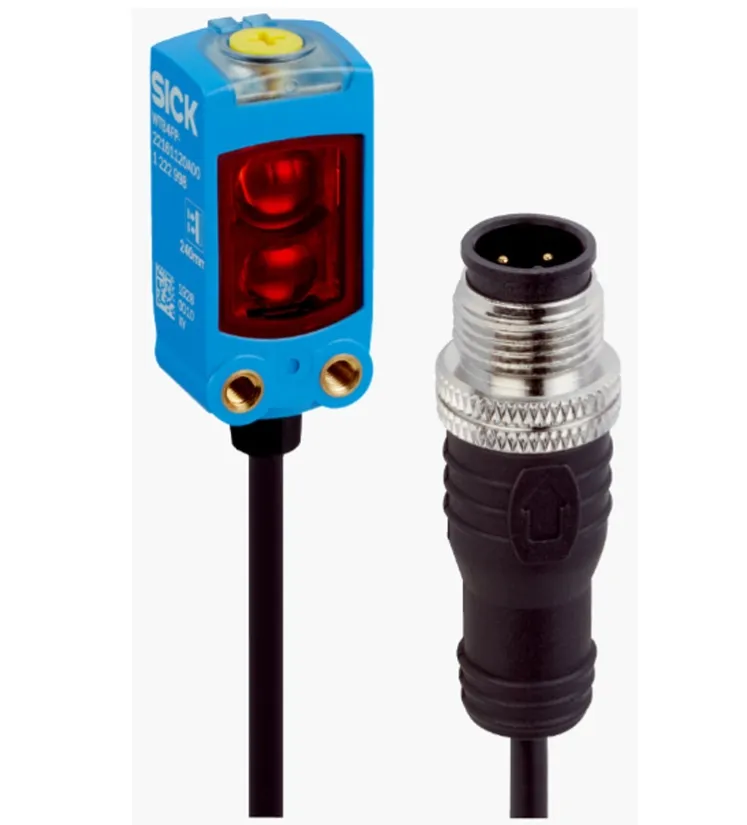
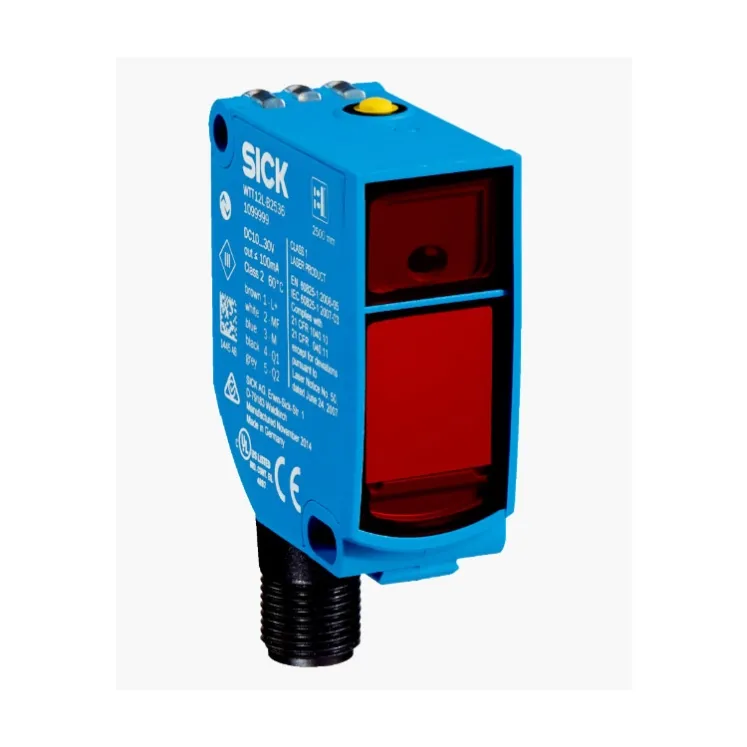
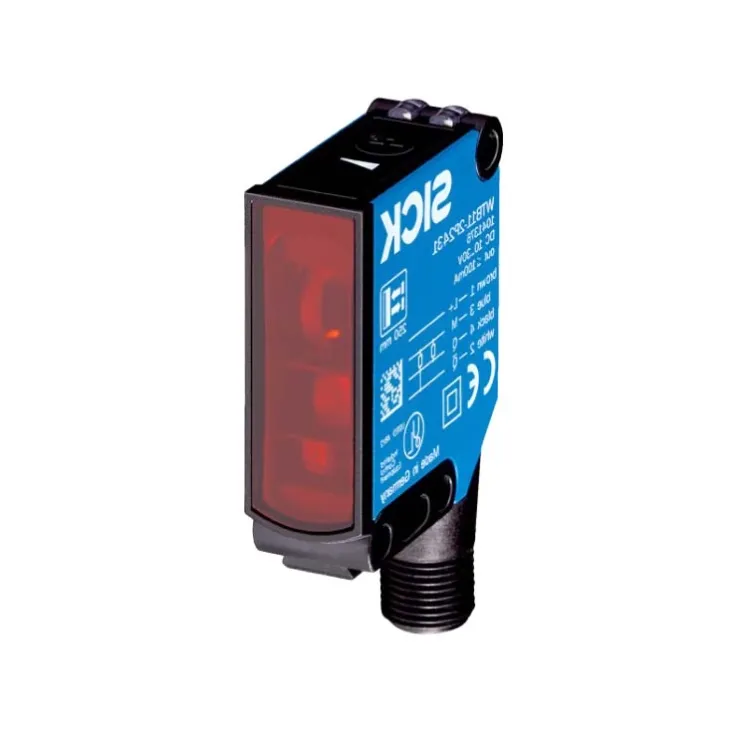
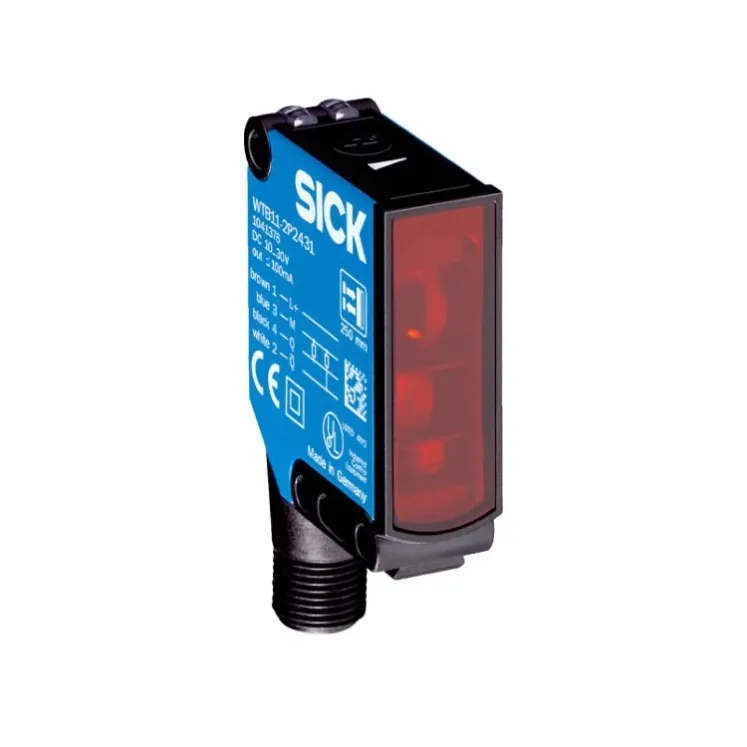
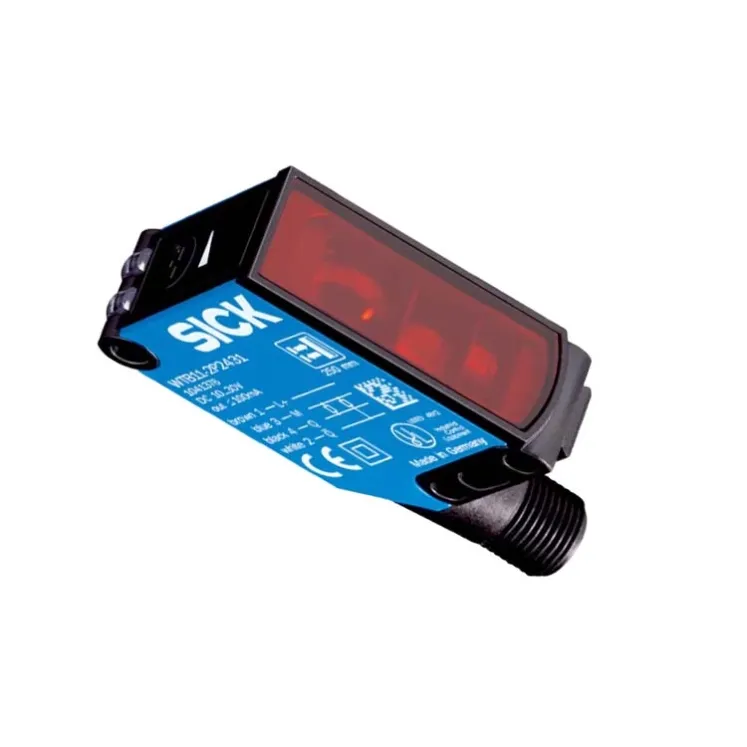
SICK WTB11-2P2461 Photoelectric sensor
SICK WTB11-2P2461 diffuse photoelectric sensor with PNP output, part 1044442. Compact housing for conveyor and packaging object detection.
Overview
The SICK WTB11-2P2461 (part number 1044442) is a compact diffuse photoelectric sensor with PNP switching output. It offers straightforward one-sided object detection for conveyor systems, packaging machines and general automation tasks where a reflector cannot be installed.
How It Works
The housing combines emitter and receiver. Light reflected from the object returns to the receiver, and the output switches when the reflected intensity exceeds the adjusted threshold. Sensitivity adjustment allows the sensor to be matched to the target and distance at hand.
Key Features
- Compact rectangular housing with single-sided mounting
- PNP switching output for standard PLC inputs
- Sensitivity adjustment for light and dark targets
- Modulated light for high immunity to ambient light
- Visible light spot for easy alignment
- Rugged construction for everyday industrial duty
Typical Applications
- Package detection on distribution and sorting conveyors
- Object presence at packaging machine stations
- Monitoring of product flow on process lines
- Detection of workpiece carriers in assembly transport
- General purpose automation sensing with limited space
Specifications
Attribute | Value |
|---|---|
Model | SICK WTB11-2P2461 |
Part number | 1044442 |
Detection principle | Diffuse (energetic) photoelectric |
Output type | PNP switching output |
Installation and Setup Notes
Choose a mounting distance with sufficient margin for the least reflective target on the line and set the sensitivity with that target present. Dark or rounded objects shorten the effective range, so verify switching across the full product mix. Where a reflective background sits behind a dark target, a background-suppression variant prevents false trips.
Frequently Asked Questions
What is the advantage of a diffuse sensor here?
Only one mounting point is needed and no reflector is required, which simplifies installation on existing machines.
Does it switch reliably on shiny plastic parts?
Glossy surfaces can reflect light away from the receiver depending on the angle, so the sensor position should be tested with the real part; tilting the sensor slightly often solves it.
Which connection variant does the 2P2461 suffix indicate?
The suffix code identifies the PNP output and connection configuration of this model variant.
Related Photoelectric Sensors
For the W12-class diffuse workhorse, see the SICK WTB12-3P2431, and for a diffuse alternative with different housing geometry, see the SICK WS12-3D2430.Overview
The SICK WTB11-2P2461 (part number 1044442) is a compact diffuse photoelectric sensor with PNP switching output. It offers straightforward one-sided object detection for conveyor systems, packaging machines and general automation tasks where a reflector cannot be installed.
How It Works
The housing combines emitter and receiver. Light reflected from the object returns to the receiver, and the output switches when the reflected intensity exceeds the adjusted threshold. Sensitivity adjustment allows the sensor to be matched to the target and distance at hand.
Key Features
- Compact rectangular housing with single-sided mounting
- PNP switching output for standard PLC inputs
- Sensitivity adjustment for light and dark targets
- Modulated light for high immunity to ambient light
- Visible light spot for easy alignment
- Rugged construction for everyday industrial duty
Typical Applications
- Package detection on distribution and sorting conveyors
- Object presence at packaging machine stations
- Monitoring of product flow on process lines
- Detection of workpiece carriers in assembly transport
- General purpose automation sensing with limited space
Specifications
Attribute | Value |
|---|---|
Model | SICK WTB11-2P2461 |
Part number | 1044442 |
Detection principle | Diffuse (energetic) photoelectric |
Output type | PNP switching output |
Installation and Setup Notes
Choose a mounting distance with sufficient margin for the least reflective target on the line and set the sensitivity with that target present. Dark or rounded objects shorten the effective range, so verify switching across the full product mix. Where a reflective background sits behind a dark target, a background-suppression variant prevents false trips.
Frequently Asked Questions
What is the advantage of a diffuse sensor here?
Only one mounting point is needed and no reflector is required, which simplifies installation on existing machines.
Does it switch reliably on shiny plastic parts?
Glossy surfaces can reflect light away from the receiver depending on the angle, so the sensor position should be tested with the real part; tilting the sensor slightly often solves it.
Which connection variant does the 2P2461 suffix indicate?
The suffix code identifies the PNP output and connection configuration of this model variant.
Related Photoelectric Sensors
For the W12-class diffuse workhorse, see the SICK WTB12-3P2431, and for a diffuse alternative with different housing geometry, see the SICK WS12-3D2430.