Safety Sensors
SICK RLY3-OSSD100 Sensor
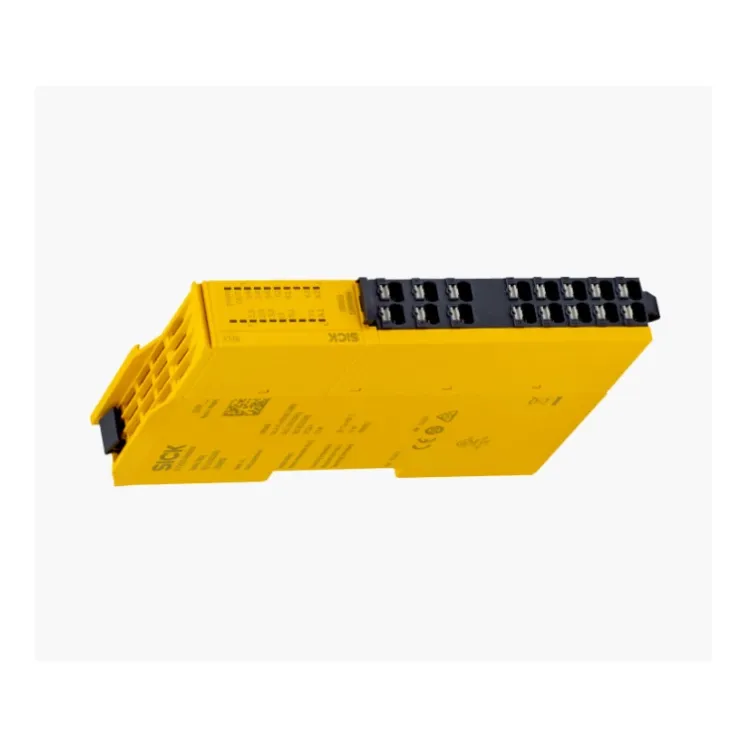
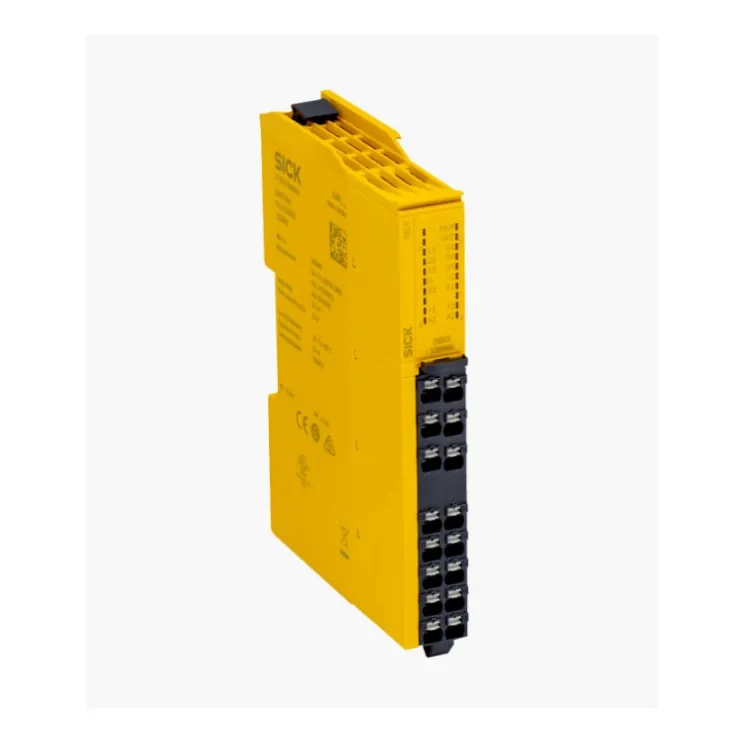
SICK RLY3-OSSD100 safety relay, part 1085343. OSSD output expansion converting light curtain and scanner signals to relay contacts.
Overview
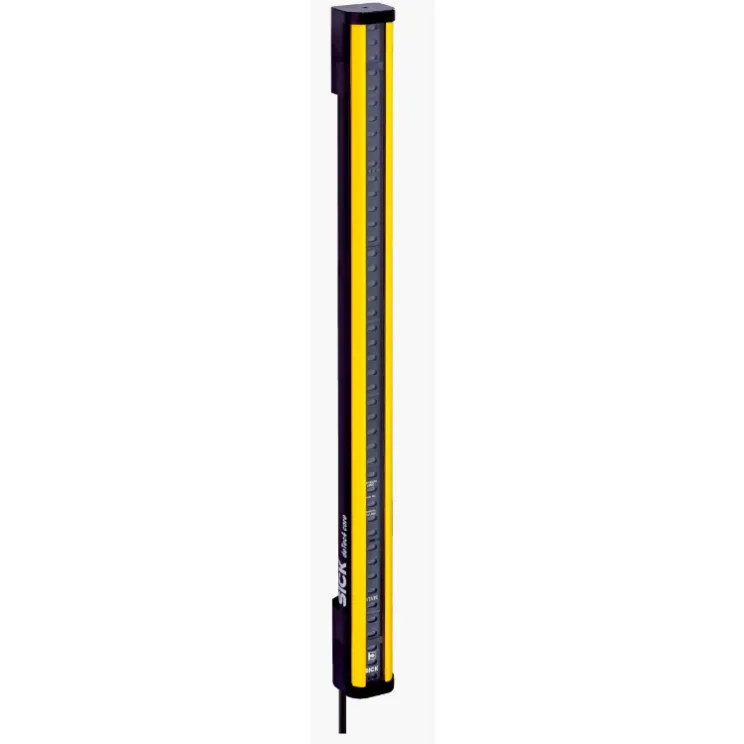
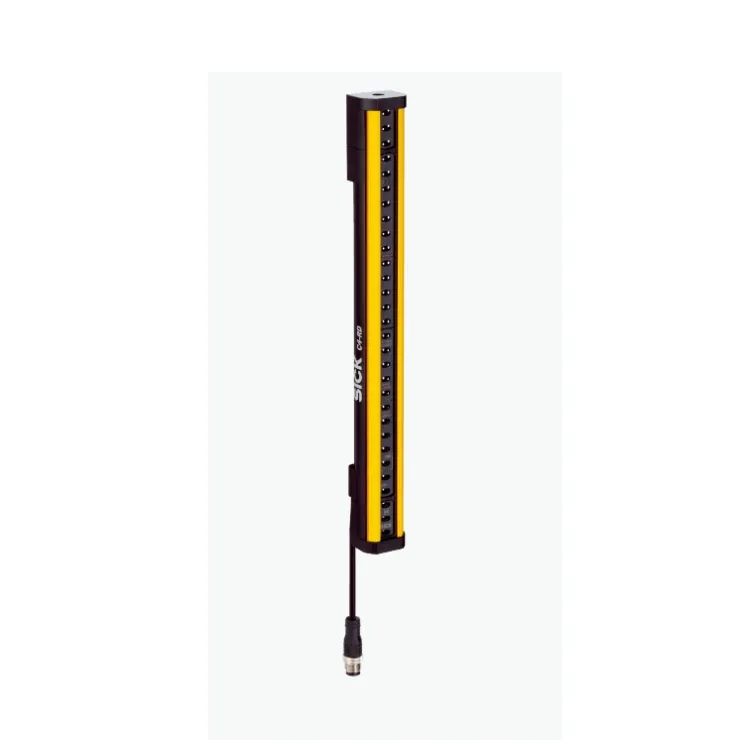
The SICK RLY3-OSSD100 (part number 1085343) is a safety relay of the ReLy family configured as an output expansion module for OSSD signals. It converts the OSSD outputs of safety light curtains and scanners into safe relay contacts, allowing machines with contactor-based controls to integrate electronic safety sensors.
How It Works
The module monitors the OSSD outputs of the connected safety sensor. When the OSSD signals are on, the relay's guided contacts close; when the sensor trips or a discrepancy is detected, the contacts open. This translates electronic safety signals into contact-based switching for the downstream control.
Key Features
- Output expansion for OSSD signals
- Part number 1085343
- Converts light curtain and scanner OSSDs to relay contacts
- Guided contacts for safe control integration
- Diagnostics for OSSD health
- Compact ReLy family housing
Typical Applications
- Integration of safety light curtains into contactor controls
- OSSD signal expansion for safety laser scanners
- Machinery with relay-based safety architectures
- Retrofit of electronic sensors onto older machines
- Safe output multiplication for control tasks
Specifications
Attribute | Value |
|---|---|
Model | SICK RLY3-OSSD100 |
Part number | 1085343 |
Device type | Safety relay, output expansion for OSSD |
Installation and Setup Notes
Connect the sensor OSSD outputs to the module inputs and wire the relay contacts into the machine's contactor control with monitoring. Verify the response behavior of the complete chain, sensor to relay to contactor, during commissioning and safety inspections.
Frequently Asked Questions
What are OSSD outputs?
Electronically monitored safety outputs of light curtains and scanners that signal a safe state actively.
Why convert OSSD to relay contacts?
Many machine controls accept contact-based safety signals; the module bridges modern sensors to such architectures.
Does it add reaction time?
Yes, the relay adds a small response time that must be included in the safety distance calculation.